
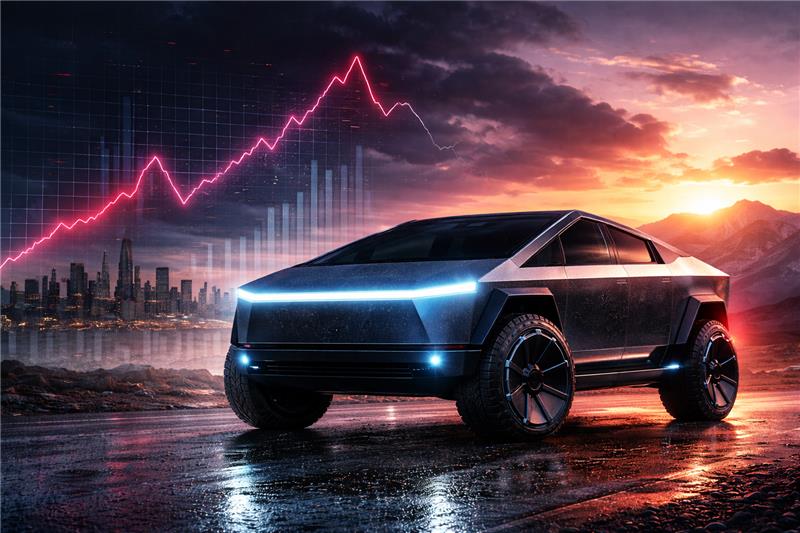
The design broke expectations. The market is rebuilding them.
The Cybertruck was never designed to follow the rules. It was designed to challenge them.
From the moment it was unveiled, it made it clear—it wasn’t trying to fit into the market. It was trying to reshape it.
That approach works in the early phase. It generates attention. It creates conversation. It positions the product as something different.
But eventually, every product has to leave the concept stage and enter the market stage.
And the market has its own rules.
As the Cybertruck moves deeper into the market, it’s encountering something every disruptive product eventually faces—friction.
Not rejection. Not failure. Friction.
The kind that comes from consumers weighing cost against benefit. The kind that comes from a category still finding its footing. The kind that slows momentum without stopping it entirely.
“Disruption creates attention. Resistance creates reality.”
That reality is now shaping the next phase of the Cybertruck’s journey.
Tesla has always operated in a high-visibility environment. Every move is analyzed. Every number is scrutinized. Every shift in momentum becomes part of the narrative.
Internal purchasing activity reflects an effort to manage that visibility—to keep production steady, to avoid sharp declines, to maintain confidence.
And when the surrounding ecosystem includes ventures like Starlink, the interconnected strategy becomes even more apparent.
But perception management has limits.
“You can guide the narrative—but the market writes the outcome.”
That’s where this story now lives.
The Cybertruck still represents one of the boldest design choices in automotive history. That hasn’t changed.
What’s changing is how it’s being measured.
It’s no longer about what it could be. It’s about what it consistently delivers.
“The design made the world stop and look. Now the numbers have to make it believe.”
And belief in the market isn’t built through moments.
It’s built through repetition.
This isn’t the end of the Cybertruck story—it’s the middle of it.
The product still has potential. The brand still has influence. The vision still has relevance.
But now, everything depends on alignment.
Alignment between innovation and demand. Between perception and performance. Between what was promised and what is delivered.
And that’s where the real story begins—not in the launch, but in what comes after.


