
The city’s rhythm lives in the sidewalks, in the storefront speakers, in the way people talk with their hands and their shoulders, in the way Sunday mornings and Saturday nights both arrive with sound attached. That’s why artists from New Orleans rarely feel like they “picked” a vibe. They feel like they were raised inside one, trained by a culture that doesn’t separate groove from identity.
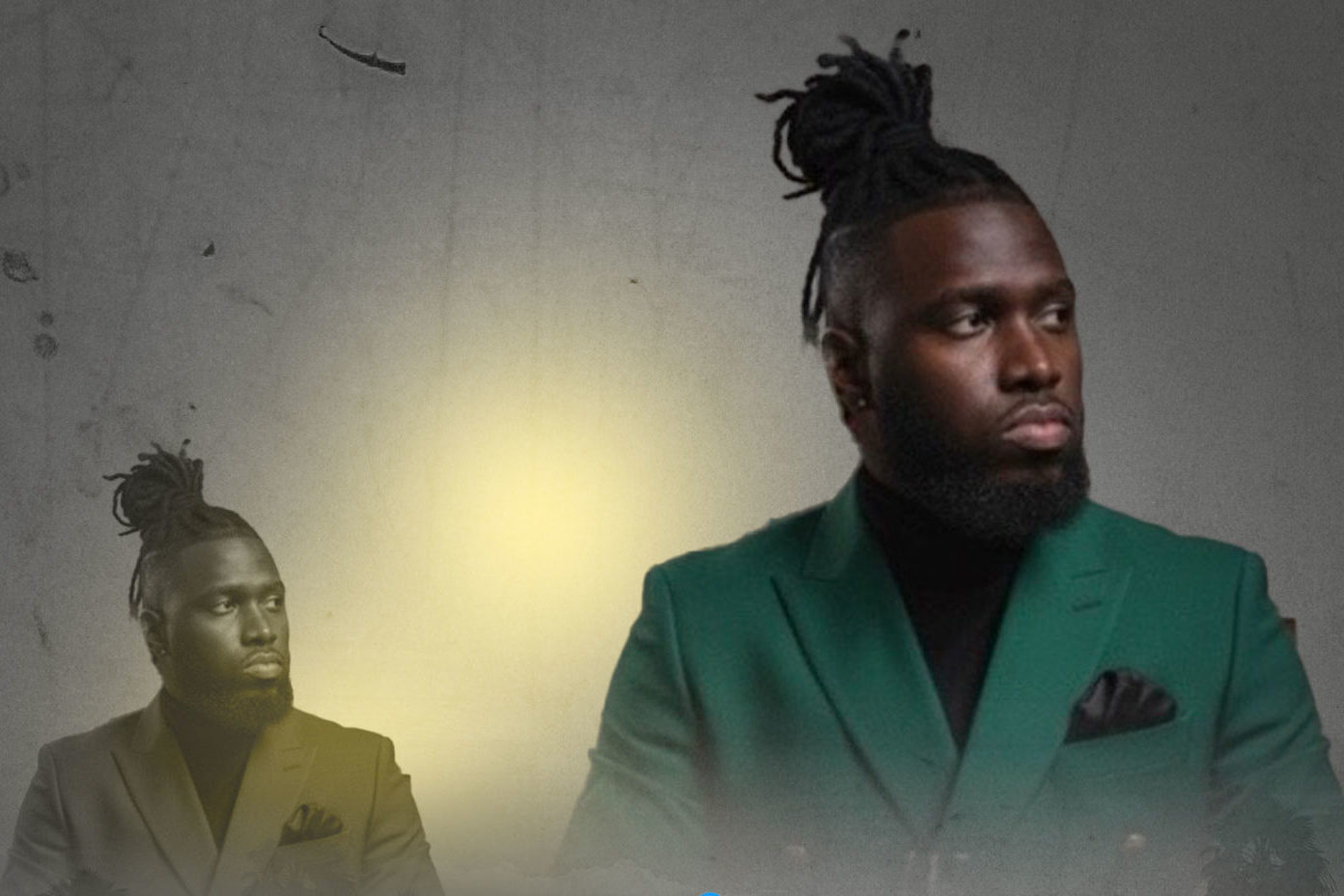
That cultural DNA sits at the center of Lo $teve—a Hip-Hop artist from New Orleans, Louisiana whose work is built on a deep love for the instrumentation of ’70s and ’80s soul, and a modern instinct for how to package that warmth into records that move like lifestyle. His music doesn’t just knock. It carries posture. It carries taste. It carries a very specific kind of Black cultural elegance that isn’t about being flashy, but about being sure.
He calls it “Old School Player Vibes,” and since September 2024, he’s treated that phrase like more than a slogan. He’s turned it into a recognizable stamp—something listeners seek out because they know exactly what it promises: smooth talk with musical foundations, street confidence with grown-man timing, and records that feel like they came from a real environment instead of an internet mood board.
The measurable momentum is already there. In 2024, Lo $teve amassed over 27,000 streams on Apple Music and over 19,000 streams on Spotify, establishing that his sound isn’t just being discovered—it’s being revisited. He’s also built proof in the places that still matter when you’re building a career instead of chasing a moment: his releases “My City” and “Canal Street Motion” drew media attention, were played on radio over 60 times combined in 2024, and were Shazamed nearly 800 times across the country—an audience behavior that signals curiosity turning into commitment.
Now his current featured record, “Home Alone Raps 2,” is pushing that momentum into a bigger cultural lane. The song is streaming in heavy rotation on 99.7 DA HEAT Miami, powered by iHeartRadio, and it was one of the station’s top requested songs in December 2025—an important distinction because requests are not passive exposure. Requests are demand.
Still, the point of Lo $teve’s story is not one record. It’s the totality of his artistry—his ear for instrumentation, his ability to translate “player culture” into modern rap language without turning it into a caricature, and his growing ability to make music that feels both classic and current at the same time. This is what it looks like when an artist builds a movement with taste as the foundation and consistency as the engine.
If you want to track the growth in real time, his world is already active and visible across YouTube and TikTok, where the OSPV identity becomes something you can see, not just hear. Because Lo $teve isn’t moving like a single-drop artist. He’s moving like a brand builder with a sound that’s designed to travel.
New Orleans is often misunderstood in music conversations because the outside world tends to treat the city like a theme. People hear “New Orleans” and immediately reach for the same references, the same stereotypes, the same shorthand. But the city’s real influence doesn’t always show up in obvious surface-level choices. Sometimes it shows up in how an artist understands groove.
His cadence carries patience. His delivery feels composed rather than frantic. Even when the bars are energetic, he doesn’t sound like he’s sprinting to convince you he belongs. He sounds like he’s walking through the track with a calm confidence—like the beat is a hallway he knows well, like the pocket is a place he’s lived before.
That composure matters because it’s a core ingredient of what makes “player culture” feel real instead of cartoonish. In Black culture, “player” has always been deeper than clothes and talk. The true player identity is composure under pressure, taste under temptation, patience when the room is impatient, control when the moment is trying to control you. Lo $teve taps into that philosophy and lets the music carry it, rather than over-explaining it.
This is why his sound feels like it belongs in motion. The records play like a soundtrack for the day, not a performance for a timeline.
There are records that hit hard, and there are records that feel rich.
That richness isn’t about budget. It’s about musicality. It’s about warm choices that create depth, and tasteful restraint that leaves room for the listener to step into the song rather than get chased by it. That’s where Lo $teve’s love for ’70s and ’80s soul becomes more than an influence—it becomes a competitive advantage.
Soul instrumentation carries emotion by default. It carries history. It carries memory. When you build hip-hop on top of that, you’re not just making a beat—you’re creating a mood that’s already culturally fluent. You’re speaking a musical language the community recognizes in the body before it recognizes in the mind.
His sound often feels like a blend of classic Black musical warmth and modern Southern street confidence. It’s the kind of palette that makes a listener feel like they’re hearing something familiar, but refreshed. Not recycled. Not forced. Just translated.
That translation is what separates an artist who borrows from the past from an artist who honors it. Lo $teve honors it by making the instrumentation feel like a foundation, not a novelty.
In the streaming era, slogans are everywhere. Everybody has a phrase, a tagline, a caption-ready identity they can post under every clip. Most of those slogans disappear because they’re not backed by consistency. They’re marketing without meaning.
Lo $teve did the harder thing.
He turned the slogan into a standard.
Since September 2024, “Old School Player Vibes” has functioned like a quality stamp. It tells the listener what kind of time they’re about to be on. It signals a certain type of smoothness, a certain kind of musical foundation, a certain type of confidence that doesn’t need to yell.
When an artist builds a brand this way, the audience starts to attach identity to it. They start to treat it like a mood they can reach for—like a playlist they trust. They come back because the sound doesn’t betray the promise.
That’s a powerful position to hold, because in a marketplace overloaded with options, trust becomes currency. Lo $teve is building trust through consistency and taste, which is exactly how movements are born.
It’s easy to claim motion. It’s harder to show the kind of motion that reflects real audience habits.
Lo $teve’s 2024 streaming numbers—over 27,000 streams on Apple Music and over 19,000 on Spotify—signal accumulation. They suggest that listeners aren’t just sampling and leaving. They’re revisiting.
The radio and Shazam activity adds another layer of credibility. When “My City” and “Canal Street Motion” combine for over 60 radio plays in a year and generate nearly 800 Shazams nationwide, that’s a specific type of feedback loop. People hear the song in the wild, then take action to identify it.
Shazam is one of the most honest audience behaviors because it’s intentional. It’s the moment a listener stops what they’re doing and says, “I need that.” That’s not passive engagement. That’s emotional connection strong enough to trigger movement.
Those are the kinds of receipts that matter for an artist building long-term, because they prove the music is traveling beyond the artist’s immediate circle. They prove the brand is reaching strangers and turning them into curious listeners.
A lot of new artists have skill, but not identity. They can rap, but they don’t sound like themselves yet.
Lo $teve sounds like himself.
His writing carries character in a way that feels effortless. Even when he’s playful, there’s an underlying confidence that doesn’t feel like performance. It feels like presence. He knows how to make a line feel visual. He knows how to make swagger feel musical. He knows how to let humor exist inside a record without turning the record into a joke.
That’s a big part of what makes the OSPV identity work. “Player vibes” isn’t just about being fly. It’s about knowing how to carry yourself in the music. Lo $teve carries himself well. He has a tone that signals he’s comfortable being the main character, and he delivers with the kind of pacing that lets the listener enjoy the ride.
In an era where so many records are rushed, his composure reads as luxury.
“Home Alone Raps 2” is not the full story of Lo $teve, but it is a strong window into why the brand is catching traction. The record plays like a short film—pop culture familiarity flipped into rap confidence, cinematic references used as texture, and performance that stays entertaining without becoming gimmicky.
That balance is harder than it looks.
Concept records fail when the concept becomes the crutch. Lo $teve avoids that trap by keeping the foundation solid. The bars still drive the track. The rhythm still holds. The delivery still carries posture. The concept becomes seasoning, not the meal.
And the public response confirms it’s working. “Home Alone Raps 2” is streaming in heavy rotation on 99.7 DA HEAT Miami, powered by iHeartRadio, and it was one of the station’s top requested songs in December 2025.
That matters because “heavy rotation” is placement, but “top requested” is audience choice. Requests reflect repeat desire. They reflect a listener deciding the record deserves to come back again, and again, and again.
Lifestyle music is built on repeat value. When a record becomes part of daily listening habits, it stops being a release and starts being a staple. The station doesn’t just help the song get heard. The station helps the song become familiar in the right way.
That familiarity is one of the fastest paths from “new name” to “recognized brand.”
Lo $teve’s momentum feels durable because it’s rooted in accumulation, not gambling.
He’s building through recognizable identity. He’s building through consistent musical taste. He’s building through real-world listener behavior—streams, spins, Shazams, and now radio demand inside a major streaming radio ecosystem. He’s building through a catalog approach rather than a viral desperation approach.
This is the type of strategy that tends to create careers with longer shelf life, because it trains the audience to expect quality and it trains the artist to keep delivering it. It also allows the brand to expand naturally, because the foundation is clear: soul-based instrumentation, smooth confidence, and a cultural elegance that feels rooted in Black musical history.
That’s an underserved lane in modern rap, not because people don’t want it, but because it requires taste and discipline to execute consistently. Lo $teve is showing the discipline.
The modern audience doesn’t live in one place. They bounce between visual and audio, between short form and long form, between discovery and deep dive.
Lo $teve’s ecosystem supports that reality.
His Instagram is where the identity lives day-to-day, where the movement feels personal and culturally connected.
His YouTube is where catalog and visuals can scale, where fans can sit with the brand longer than a scroll.
His TikTok is where moments travel, where hooks turn into habits, where personality becomes a magnet.
When those lanes move together, the audience doesn’t just “hear a song.” They start to recognize an artist. Recognition is the bridge between casual listening and real fandom.
And real fandom is what turns an artist into a movement.
At its core, Lo $teve’s artistry is about translation.
He’s translating vintage soul instrumentation into a modern rap posture.
He’s translating New Orleans groove into nationwide replay value.
He’s translating “player culture” into something tasteful and current, without flattening it into stereotype.
He’s translating momentum into a brand that people can identify in seconds.
That’s why the title “Soul Samples & Street Elegance” fits the movement. Because the sound is warm, musical, and rooted. But the posture is still street, still confident, still sharp. It’s elegance that knows where it comes from.
And with “Home Alone Raps 2” moving in heavy rotation on 99.7 DA HEAT Miami—and earning top-requested status in December 2025—the movement is no longer theoretical. It’s active.
This isn’t an artist trying to introduce himself.
This is an artist building a lane, then inviting the culture to live in it.
To stay locked into the OSPV world as it expands, follow Lo $teve and tap into the full ecosystem on YouTube and TikTok.


