
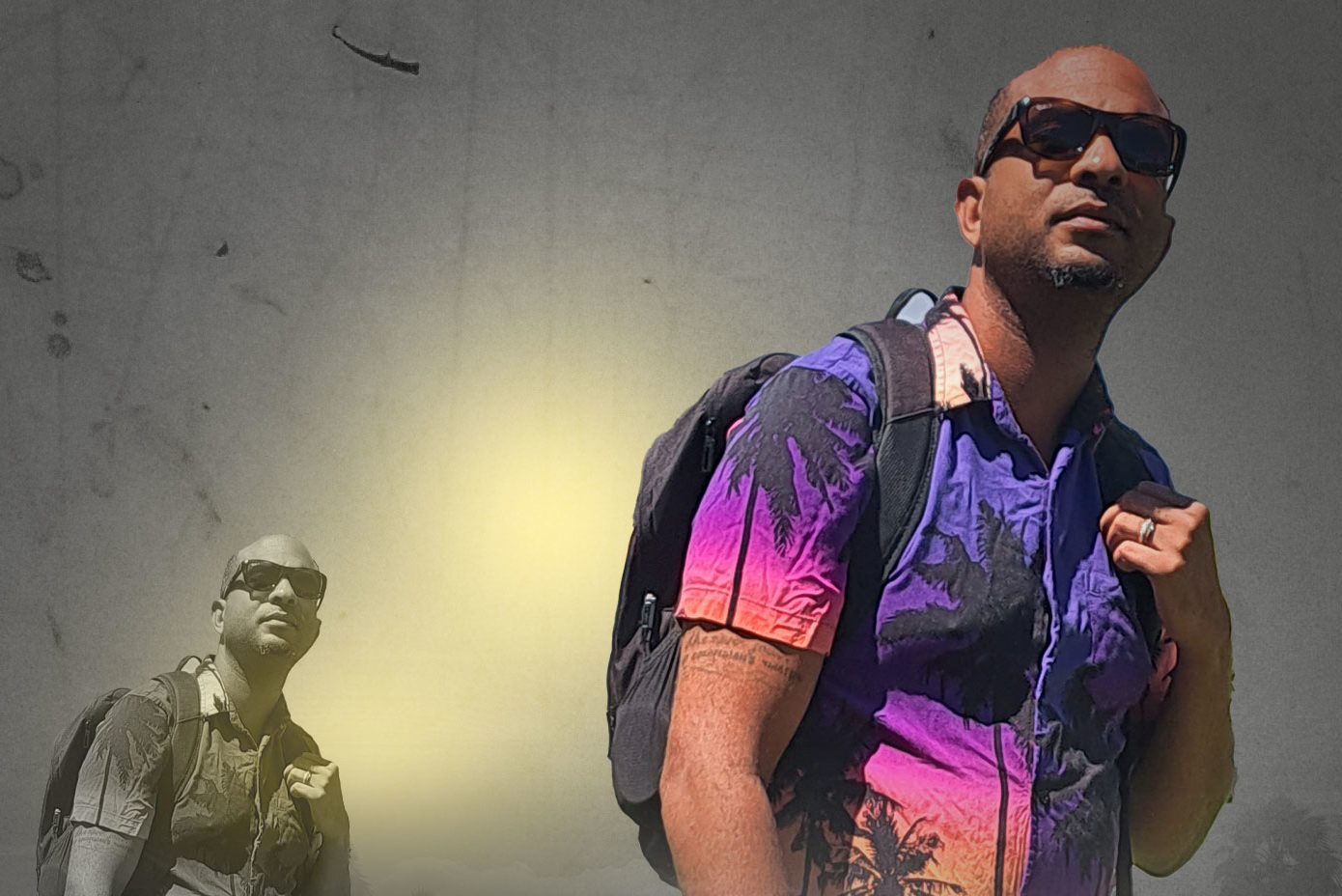
There are artists who make music because they want to be seen.
Then there are artists who make music because silence feels like surrender.
That second kind of creator does not treat songs like content. He treats them like proof of life. Proof of thought. Proof of pain being converted into purpose. Proof that a mind can refuse what it’s been handed and still build something new with nothing but rhythm, language, and nerve.
That is the space The DMV occupies.
He’s a solo Hip-Hop artist whose identity isn’t rooted in chasing a mainstream sound, but in challenging the creative boundaries that keep people docile. His music is driven by a kind of desperation that doesn’t read like weakness. It reads like urgency. Like a man who feels called to create the kind of lyrics that don’t just entertain a generation, but sharpen it.
Not just in America.
In the world.
Born in Washington, D.C. and now representing Fort Lauderdale, Florida, The DMV carries a cultural duality that makes his pen dangerous in the best way. D.C. is a city of power, politics, tension, and truth spoken in codes. South Florida is a place where survival is loud, style is language, and the line between celebration and pressure can change in a single night. He’s learned how to translate those realities into music that feels poetic, grimey, and uncomfortably honest.
And right now, the work is getting repeated into recognition. His music is currently streaming in heavy rotation on POWER 102.8 Los Angeles (TuneIn), with the station’s ecosystem living socially through POWER 102.8 Los Angeles on Instagram.
He’s also aligned as a global brand ambassador with RADIOPUSHERS and MUSICHYPEBEAST—platforms built around discovery, culture, and independent artist momentum that has a real message behind it.
And as the calendar turns into 2026, The DMV is building the ownership layer too. He’s launching an exclusive clothing line and e-commerce storefront with OpenWAV, a direct-to-fan platform that allows artists to sell music and merchandise directly to supporters, while fulfillment and shipping are handled at scale to over 200 countries. Hoodies, shirts, hats, beanies, and apparel for men, women, and children aren’t being positioned as a side hustle. They’re being positioned as an extension of identity—because when your art is about freedom, the brand has to be wearable.
But the biggest story is still the simplest one.
The DMV is rapping for true freedom.
Freedom to live the lifestyle he chooses.
Freedom to refuse what the industry tries to normalize.
Freedom to tell the truth in a world addicted to the comfortable lie.
And he’s building that freedom the only way a real lyricist can—bar by bar, verse by verse, hook by hook.
The DMV isn’t a regional label. It’s an identity code.
It stands for The Disruptive Musical Verbalizer—and that word is the key. Disruptive doesn’t mean chaotic. It means intentional disturbance. It means you refuse to let people sleepwalk through the same weak ideas, the same recycled music, the same safe narratives that never challenge the listener to become more.
A disruptive artist doesn’t just express emotion.
He interrupts complacency.
He shows you the truth you tried to scroll past.
He brings the subject back to the center of the room and refuses to whisper it.
That is exactly what The DMV is attempting to do with his music. He’s not trying to be a background soundtrack for someone else’s life. He’s trying to be a force that shakes the listener awake, not through gimmicks, but through craft—multi-syllabic writing, picture-painting storytelling, and the kind of honesty that feels like it might cost something to say out loud.
His style is built on a unique blend of Southern, old school, and East Coast influence, and that matters because it creates both swing and structure. It creates cadence without sacrificing clarity. It creates grit without sacrificing poetry. The public describes his music as an East Coast hybrid—poetic and grimey—and that combination fits the disruption.
Poetry makes you feel.
Grime makes it real.
When those two collide, the truth hits harder.
The DMV did not begin from an industry plan. He began from dissatisfaction.
He was tired of the music he was hearing in the mainstream. Tired of songs that were loud but empty. Tired of records that treated the listener like a number instead of a human being. Tired of the creative ceiling being lowered and sold as “the new standard.”
That frustration didn’t turn into complaints.
It turned into work.
His origin point was poetry, which is important because poetry teaches you to respect language. It forces you to choose words with precision, to shape emotion into structure, to build impact without relying on volume. When friends suggested he start rapping, the craft became a new way to deliver what he already had: a mind full of story, a voice full of observation, and a need to translate lived experience into something that resonates.
He’s been working on his craft to progress, and that phrasing matters. It’s not “I’m a star.” It’s “I’m sharpening.” It’s the mentality of someone building a weapon, not a costume.
He writes from street stories, past experiences, and stream of consciousness. That’s not a trendy description—it’s an artistic philosophy. It means his music doesn’t come from imitation. It comes from memory, pressure, and the raw material of real life.
He says his childhood influenced his music greatly, and then he drops the kind of detail that changes the entire frame: his mother was a Black Panther.
That is not a trivia fact. That is an inheritance.
When resistance is in your household story, “defiance” doesn’t become something you put on for an image. It becomes part of the way you move through the world. It becomes the instinct to question authority, to challenge narratives, and to refuse the idea that you should be grateful for whatever limitations the world tries to assign.
You can hear that in his creative posture. He doesn’t write like someone seeking permission. He writes like someone building a point. He isn’t afraid of being disliked, because disruption is rarely celebrated at first.
The DMV’s work carries the kind of discipline that often gets overlooked in a fast-content era: the patience to paint a picture, the focus to land multi-syllabic sequences, and the intention to treat bars like they carry consequence. That’s why the music reads as poetic and grimey. It’s storytelling that respects reality and refuses to sanitize it.
Every serious artist has a moment where the illusion breaks.
The DMV had a single he believed was critically acclaimed, and he let a label hear it. The label bashed it.
For a lot of artists, that moment becomes a wound.
For The DMV, it became armor.
He laughs about it now, and that isn’t dismissal—it’s maturity. It’s the realization that gatekeepers are not gods. It’s the understanding that not everybody is going to like you, and more importantly, not everybody who dislikes you is qualified to define you.
That moment didn’t push him into compromise.
It pushed him into clarity.
Because when you accept that approval is not the goal, you become free enough to make honest music. And honest music is what creates real communities—the kind that don’t leave when a trend changes.
When asked how he defines passion, he gives a definition that cuts through the motivational talk: passion is something you can’t stop doing no matter how hard you try.
That one sentence tells you everything.
It tells you he’s not relying on mood.
It tells you he’s building through repetition.
It tells you he understands that progress isn’t glamorous—it’s persistent.
He’s also brutally honest about where he’s at: he says music hasn’t impacted his career yet and he’s just getting started. That honesty is not weakness. It’s a refusal to pretend. It’s a Gen Z-level transparency that actually strengthens the brand because it proves the hunger is real.
This isn’t a man selling a fantasy.
This is a man building something that will eventually be undeniable.
He calls “Two Brovas in Broward” his most popular song so far, and he explains why in a way that reveals his formula: the production and the story.
That’s important because it tells you he’s not chasing gimmicks. He’s chasing narrative. He’s chasing the moment when a listener hears a line and realizes, “That’s my life,” even if the details are different. Story-driven rap has always been the most powerful kind because it doesn’t just entertain.
It documents.
It reflects.
It teaches.
That’s the exact foundation you need if your goal is to create thought leaders. Thought leaders aren’t created by shallow slogans. They’re created by language that makes people look at their life differently—language that encourages questioning, courage, and action.
And The DMV is clearly wired for that lane.
The track he’s pushing on radio is called “Revolution,” and he says it’s a call to action.
That theme isn’t random. It’s aligned with his entire origin story. He started making music because he was tired of what the mainstream was normalizing. He writes from real life. He wants to challenge societal boundaries not only in America, but across the world.
A call to action is risky because it asks the listener to participate. It asks them to think, not just vibe. It asks them to become more than a fan.
That is exactly the kind of disruption he is chasing.
He is desperate to create music that helps form the next generation of thought leaders—people who reject passive living, people who question systems, people who demand more from themselves and from the world.
That’s what “Revolution” represents at its core: a refusal to let the listener remain asleep.
There’s a version of freedom people say out loud and a version of freedom people actually live.
The DMV is rapping for the second one.
Freedom to define his own path without begging an industry for validation.
Freedom to speak without shrinking.
Freedom to build a lifestyle that reflects who he is, not who the market wants him to be.
He’s also honest about his fears of the business: labels charging artists to sign and how the game has changed. He isn’t paranoid—he’s observant. And that observation becomes fuel for independence. Because once you see how the system works, the goal becomes simple.
Build outside the system.
Build a community that respects the work.
Build ownership so your art isn’t dependent on someone else’s permission.
That is true freedom in music.
And he’s writing toward it daily.
When a record is heard once, it’s exposure.
When it’s heard repeatedly, it becomes identity.
That’s why it matters that his music is currently in heavy rotation on POWER 102.8 Los Angeles (TuneIn). Heavy rotation is not just airplay—it’s a repetition engine. It trains recognition. It turns a name into familiarity. It helps an artist move from “new” to “known.”
It also sets the stage for everything that comes next. The DMV hasn’t performed live yet, and that’s not a weakness—it’s a timeline. When the stage arrives, the music will already have motion behind it. The audience won’t be starting from zero.
They’ll be arriving already familiar with the voice.
And when you are building thought leadership through music, familiarity matters because your message needs repetition to sink in. People don’t change from one song.
They change from consistent truth.
The DMV says music is therapy.
That isn’t a cliché for him. It’s the reason he makes it.
He talks openly about mental health being difficult and mentions bipolar disorder in a way that reads like honesty, not shame. In this era, that candor matters. Gen Z doesn’t connect to perfection. They connect to truth. They connect to artists who admit the struggle and still show up to create.
When an artist uses music to heal hidden pain and wounds the world can’t see, the output carries a different weight. It stops being just sound.
It becomes survival.
It becomes witness.
And that type of music is exactly what resonates with people who are searching for something real—something that understands them, not something that performs for them.
As 2026 approaches, the DMV is building the direct-to-fan infrastructure through OpenWAV.
This matters because independent artists no longer win by streams alone. Streams create visibility, but direct-to-fan creates leverage. With OpenWAV, artists can sell music and merchandise directly to supporters while fulfillment and shipping are handled at scale to over 200 countries.
For The DMV, that means building a real brand ecosystem around the message. Men’s apparel, women’s apparel, children’s apparel, hoodies, shirts, hats, beanies—items that turn a listener into a representative.
And when your music is built around truth, revolution, and freedom, your merch becomes more than clothing.
It becomes a uniform for the movement.
It becomes a way for supporters to say, without explaining, “I’m aligned with this.”
That is how you turn art into culture.
That is how you turn culture into longevity.
The DMV is also positioned as a global brand ambassador aligned with RADIOPUSHERS and MUSICHYPEBEAST—platforms that support independent voices building real momentum with a real message.
That alignment matters because the modern era rewards infrastructure and narrative as much as it rewards talent. Talent gets attention, but alignment and consistency keep it. The DMV’s brand is built on truth for everyday people, and that is exactly the kind of foundation that grows slow and strong.
Not as a gimmick.
As a movement.
When asked what legacy he wants, he doesn’t oversell it. He doesn’t pretend to be bigger than life. He says he just wants to be heard.
That’s not small.
That’s honest.
Being heard means being understood. It means the work lands. It means the years of writing and refining weren’t wasted. It means the stories reached the people who needed them. It means the listener didn’t just press play—they felt something shift.
That is the legacy of a disruptive artist.
Not a moment of hype.
A lifetime of resonance.
If you want to connect to the music and the movement directly, start with The DMV on Spotify and lock in with The DMV on Instagram for the day-to-day voice.
If you want to see the visuals as the story develops, tap into The DMV on YouTube and catch the momentum snapshots onThe DMV on TikTok.
If you want to hear the rotation where the music is currently moving, tune in through POWER 102.8 Los Angeles (TuneIn) and track the ecosystem through POWER 102.8 Los Angeles on Instagram.
And if you want to understand the ownership lane he’s building into 2026, the direct-to-fan foundation lives through OpenWAV, alongside the culture infrastructure of RADIOPUSHERS and MUSICHYPEBEAST.
The DMV is not rapping for applause.
He is rapping for freedom.
He is rapping to disrupt the boundaries people were told to accept.
He is rapping to help form the next generation of thought leaders.
And he is doing it the way real change is built—every single day, bar by bar, verse by verse, hook by hook.


