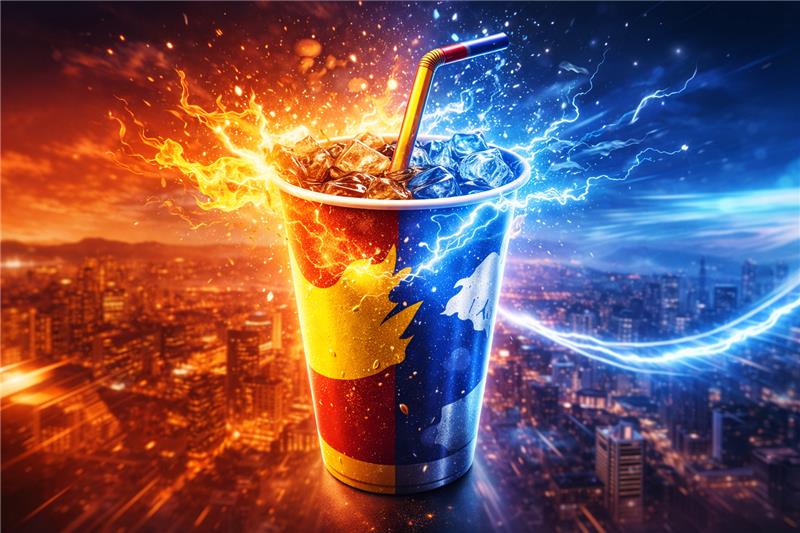
This isn’t about beverages alone—it’s about embedding McDonald’s into the emotional and physical rhythm of a generation that lives on momentum.
The alignment between McDonald’s and Red Bull represents a clear evolution in how legacy brands maintain cultural relevance. McDonald’s is not abandoning its identity—it is expanding it. For decades, the brand has been defined by reliability, speed, and familiarity. Those traits built global trust. But in today’s environment, trust alone is not enough. Relevance requires movement, and movement requires understanding how consumer behavior is changing at its core.
Gen Z is not anchored to routines the way previous generations were. Their consumption patterns are fluid, shaped by shifting schedules, digital lifestyles, and continuous activity. McDonald’s recognizes that reality and is adjusting accordingly. By integrating Red Bull into its offering, the brand is no longer confined to traditional meal-based engagement. It is stepping into the dynamic, energy-driven lifestyle that defines how younger consumers interact with the world.
Energy has become a form of currency in modern life. It fuels productivity, creativity, and social interaction, all of which happen simultaneously rather than sequentially. Red Bull has built its brand around this concept, positioning itself as a tool for maintaining momentum. That positioning resonates strongly with a generation that values output, efficiency, and staying active across multiple lanes at once.
When McDonald’s brings Red Bull into its system, it taps directly into that currency. The brand is no longer just providing sustenance—it is supporting continuity. This creates a deeper connection with the consumer, one that extends beyond physical need and into lifestyle alignment. McDonald’s becomes part of the process of keeping up with life, not just pausing for it.
One of the most strategic advantages of this move is that it expands engagement without increasing friction. Meals require time, planning, and a certain level of commitment. Energy drinks do not. They fit seamlessly into existing routines, allowing consumers to engage with the brand more frequently without disrupting their day.
This increased frequency translates into stronger brand presence. Each additional interaction reinforces familiarity and builds habit. Over time, those habits become loyalty. McDonald’s is not forcing new behavior—it is aligning with behavior that already exists. That alignment is what makes the strategy sustainable rather than temporary.
Red Bull brings cultural credibility that is deeply rooted in performance, creativity, and movement. McDonald’s brings a global infrastructure that ensures accessibility. Together, they create a system where cultural relevance can be scaled without losing authenticity. This is a rare balance, and it is one that allows McDonald’s to remain both familiar and current at the same time.
By combining these strengths, McDonald’s positions itself at the center of a broader cultural conversation. It is no longer just a participant in the fast-food category—it becomes part of a lifestyle ecosystem. This shift reflects a long-term strategy designed to maintain relevance in a market where consumer expectations continue to evolve.


