
There are artists who chase a sound.
Then there are artists who build a language.
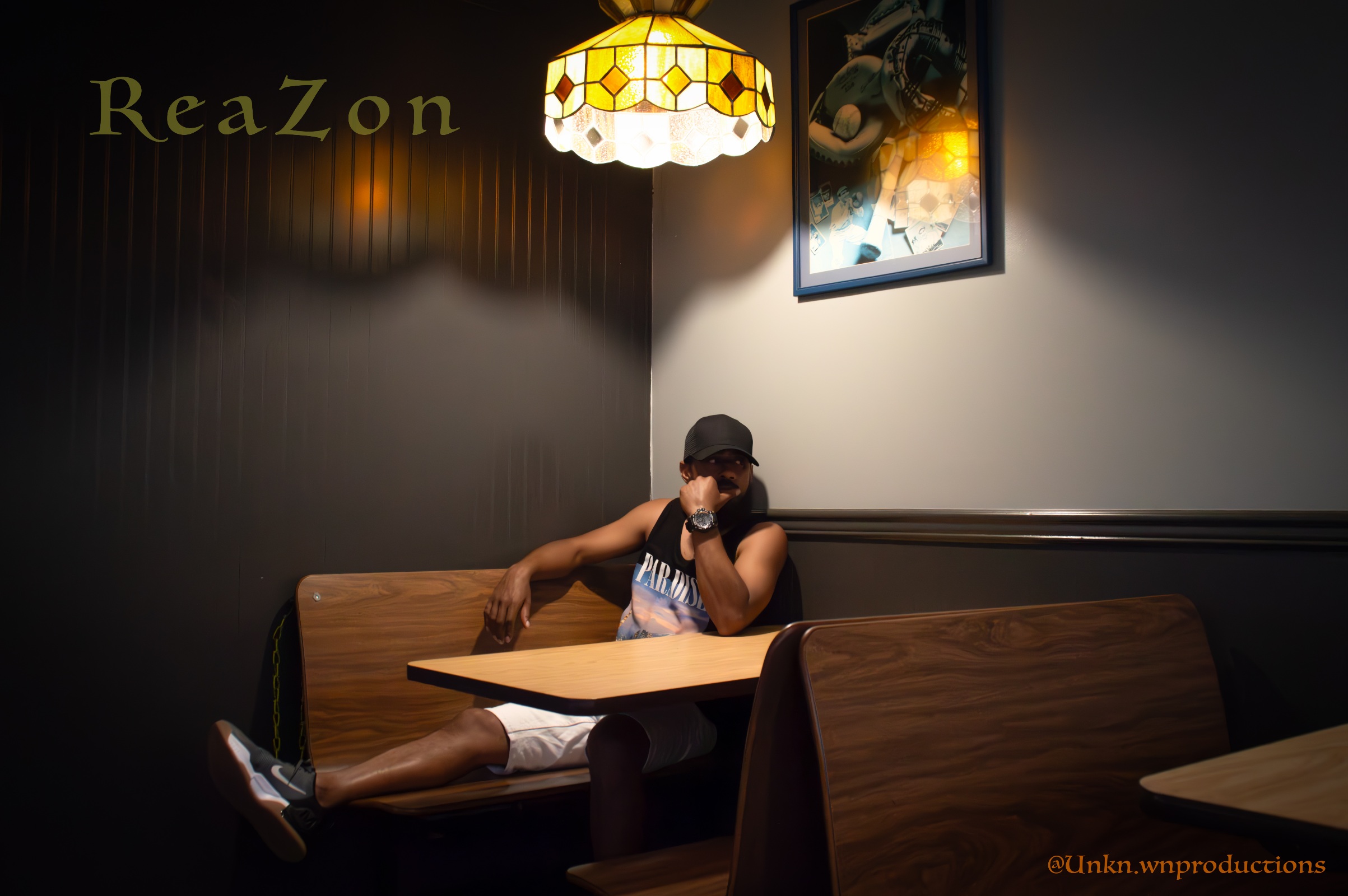
ReaZon belongs to the second category, and that’s exactly why he reads as one of the most innovative Gen Z hip-hop storytellers in his lane right now. He isn’t selling a persona that looks good on camera. He’s translating real life into something structured enough to replay, and honest enough to feel like a mirror.
In a culture where attention moves fast and authenticity gets tested even faster, ReaZon’s advantage is simple and rare: he doesn’t perform pain as an aesthetic. He documents survival as a discipline. His writing carries that cinematic street-poetic edge, but it never feels like a costume. It feels like a testimony in motion, delivered with an emcee’s control.
His music doesn’t just “sound like” experience. It behaves like experience.
It has tension.
It has consequence.
It has those moments where the listener pauses because the line didn’t just rhyme, it revealed something they’ve been trying not to admit.
That is the kind of storytelling that makes people stop scrolling. Not because it’s loud, but because it’s real.
ReaZon’s story starts in Reading in the 90s, and it starts the way many real stories start: without a safety net.
His father wasn’t around, and a father figure left his life when he was five. That kind of early absence doesn’t only create a gap. It creates a question that keeps echoing—who’s here for me, and what does it mean if the answer is “nobody”?
On top of that, his mother had a lot on her plate that she chose not to deal with, and he learned early that certain parts of childhood weren’t going to be protected. He’s not dressing it up. He’s not trying to sound dramatic. He’s saying what it was: he had to navigate a lot of it alone, and there were moments where it didn’t feel like anyone was concerned about how he would turn out.
That kind of environment teaches you how to survive long before it teaches you how to dream.
And survival, when learned young, becomes a lens.
You start reading energy early.
You start understanding silence.
You start managing your emotions not because you want to be “mature,” but because you don’t have the luxury of falling apart when the world around you is already unstable.
This is where the ReaZon pen begins. Not in a studio. Not in a “come-up” storyline. It begins in the quiet, heavy work of learning how to hold yourself together.
Growing up in a rough neighborhood forces choices on you that most people never have to make.
It teaches you how to keep your head on a swivel, but it also teaches you how to keep your emotions in a tight grip. That part matters, because the best storytellers aren’t always the ones who feel the most. They’re often the ones who learned how to feel deeply and still stay disciplined enough to translate the feeling into something coherent.
ReaZon learned that discipline early.
He found an outlet in music, and it wasn’t casual. It wasn’t hobby energy. It was relief. It was a place to put the pressure so it didn’t turn into something uglier. A place to convert anger into rhythm, grief into structure, confusion into language.
That’s why his voice feels “cinematic” in the truest sense. Not because he’s chasing movie vibes, but because his writing has the pacing of someone who’s lived through scenes that didn’t come with background music.
His bars move like a camera because his life trained him to observe like a director.
And when an artist develops that level of observation, the storytelling starts to feel inevitable.
The details of how an artist falls in love with the craft usually reveal the most about who they become.
In ReaZon’s case, hip-hop was his first love, but rhyme itself came even earlier. He fell in love with the art of rhymes by reading Dr. Seuss books. That’s not a throwaway detail. That’s foundation. That means he was learning rhythm as structure before he ever learned it as culture.
Then the culture arrived.
DMX and Method Man weren’t just artists to him. They were energy sources. The kind of voices that don’t hide the darkness, the kind of writing that doesn’t flinch, the kind of presence that makes honesty feel powerful instead of embarrassing.
And then there’s the scene that explains everything.
He remembers being six or seven, taking his brother’s Walkman into the bathroom, sitting in the bathtub, listening to albums, and writing rhymes in books.
That image is more than nostalgia. That’s origin.
That’s a kid turning a private space into a studio because the world outside didn’t feel safe.
That’s a kid discovering that words can become protection.
That’s a kid realizing that if he can put the feeling into language, the feeling can’t drown him as easily.
This is where his storytelling style starts to make sense. It’s not “influenced” by emotion. It’s built from it.
He didn’t learn to write because it was cool.
He learned to write because it helped him survive the hours that didn’t feel survivable.
ReaZon says he struggled through adolescence and his teenage years, and writing became his therapy to deal with the pain.
That’s not a typical artist statement. That’s a creative function.
When writing becomes therapy, you don’t write to impress people. You write to understand yourself. You write to release pressure. You write to name what hurts so it stops running your life in silence.
That process does something to an emcee’s skill set.
It develops precision.
It develops patience.
It develops the ability to say a lot without yelling.
It develops the ability to be raw without being reckless.
It develops a sense of integrity in the bars, because you know the words aren’t just entertainment. They’re part of your survival system.
That’s why ReaZon’s rap skills don’t feel like a performance of lyricism. They feel like discipline. Like a writer who respects the craft because the craft has done real work for him.
This is also where his Gen Z relevance becomes clear.
Gen Z isn’t allergic to vulnerability.
Gen Z is allergic to fake vulnerability.
They’ve seen too many people turn trauma into branding, or pain into a shortcut. They’ve seen too many captions that sound deep but aren’t lived. So when an artist shows up with bars that feel processed, lived, and controlled, the audience responds differently.
They don’t just like it.
They trust it.
And trust is what turns listeners into students of the art.
Then life added a different kind of weight.
ReaZon had his son at 18. That kind of responsibility changes an artist before the industry ever gets a chance to. It forces you to grow up in real time. It forces you to become stable even when you’re still figuring out who you are.
And then, when his son was only two, his mother passed away.
That type of loss doesn’t just hurt.
It restructures.
It changes the way you look at time.
It changes the way you define purpose.
It changes the way you measure strength, because strength becomes less about what you can say and more about what you can endure while still showing up for someone who needs you.
In the middle of that, his longtime friend and childhood love—his wife now—helped him raise his son. They went on to have two more children of their own.
That isn’t just a romantic detail. That’s the kind of life context that explains why ReaZon’s writing is so grounded. It’s not coming from a place of theoretical struggle. It’s coming from lived responsibility. It’s coming from the kind of manhood that doesn’t get flashy headlines, but carries real weight.
It’s also why his work resonates with creators and emcees worldwide. Because the most inspiring thing in the culture isn’t always the biggest flex.
Sometimes the most inspiring thing is staying.
Building.
Raising.
Choosing discipline over destruction when the easy choice would be to fold.
In his mid-20s, ReaZon says God showed Himself to him, and it put him on a path of constant change.
That is a turning point that rewrites the tone of the music.
Because faith, when it’s real, doesn’t just add “inspiration.” It adds accountability. It adds reflection. It forces confrontation with the parts of your life you’ve been avoiding. It pushes you into truth, even when truth is uncomfortable.
ReaZon describes how he started facing things from childhood and adulthood that he didn’t understand he needed to face.
That’s the kind of sentence that doesn’t get said unless a person is serious about transformation.
And then he frames the artistry with a clarity that explains his evolution: writing was already therapeutic, hip-hop was already his culture, and God gave him a way to face those things without fear.
That isn’t a slogan. That’s a creative mission statement.
It means the pen is no longer only a survival outlet.
It becomes a tool of courage.
It becomes a way to look at trauma without flinching.
It becomes a way to turn pain into proof, not for the internet, but for the soul.
This is where his storytelling becomes more than “deep rap.”
It becomes testimony.
And testimony—when written with skill—has a different kind of power in hip-hop. It doesn’t just move you emotionally. It reorients you. It makes you consider your own life. It makes you question what you’ve normalized. It makes you wonder what you’ve been avoiding.
That is rare.
That is impact.
That is what separates innovative storytellers from artists who only know how to chase a vibe.
ReaZon says that about a month ago, he decided to start sharing his testimony with people who are willing to listen, and that decision is part of how his music has evolved into what it is today.
That matters, because it signals intent.
It means the art is not just self-expression. It’s service.
He’s not writing only to be heard. He’s writing to reach. To connect. To provide language for the kind of internal battles people fight quietly, while still trying to create, still trying to parent, still trying to love, still trying to build.
And this is exactly why he reads as a Gen Z innovator. Gen Z doesn’t want to be preached at. They want to be understood. They want real stories that don’t feel like marketing. They want honesty that still has structure. They want music that makes them feel less alone without turning their pain into a trend.
ReaZon’s evolution into testimony puts him in a lane that can travel globally, because testimony is universal.
It doesn’t matter what city you’re from.
It matters what you’ve survived.
It matters what you’ve learned.
It matters how you translate it.
ReaZon translates it with the discipline of an emcee and the clarity of someone who has done real internal work.
Calling ReaZon a storyteller is accurate, but it’s incomplete unless you emphasize the core: he’s an emcee with real craft.
His writing is structured.
His rhyme patterns are intentional.
His cadence feels like thought in motion.
He knows how to sit in a pocket without rushing, and he knows how to elevate intensity without turning it into noise.
That’s what makes his music feel cinematic in a way that’s credible. He frames scenes. He controls pacing. He understands when a line needs to land, when a thought needs space, and when a metaphor needs to do more than sound clever.
He writes with the kind of discipline that lyric-heads respect, because the bars aren’t random.
They’re built.
And he writes with the kind of emotional realism that Gen Z respects, because the emotion isn’t performed.
It’s processed.
There’s a difference.
Processed emotion becomes wisdom.
Performed emotion becomes content.
ReaZon’s writing leans toward wisdom, and that’s why creators outside of rap can still feel it. Filmmakers. Designers. Entrepreneurs. Editors. Writers. People building brands. People building families. People building futures while fighting battles nobody sees.
That’s the cultural value of his skill set.
He isn’t only rapping about life.
He’s mapping how life feels from the inside.
The modern creator era is full of talented people who are quietly fighting themselves.
Not because they lack ability.
Because pressure is constant.
Comparison is constant.
Performance expectations are constant.
The need to be “on” is constant.
So when an artist shows up who can name self-sabotage without sounding corny, who can describe ambition without sounding delusional, who can describe pain without turning it into a costume, creators hear it differently.
They hear it as fuel.
They hear it as permission to be honest without losing credibility.
They hear it as an example of how to turn internal warfare into something that sharpens your vision instead of destroying it.
That’s what makes ReaZon’s storytelling empowering.
He doesn’t motivate by yelling slogans.
He motivates by demonstrating discipline.
He makes the listener feel the cost of growth, and that cost becomes inspiration because it’s real.
He makes the inner war visible, and that visibility becomes relief for the people who thought they were the only ones fighting it.
That is hip-hop at its highest function.
Not entertainment only.
Culture.
Medicine.
Blueprint.
Truth, delivered in rhythm.
ReaZon’s catalog and identity aren’t defined by one song.
But some songs function like a calling card.
“Frame of Mind” is one of those, and it works as icing on the cake because it captures his core strengths in one frame: internal honesty, disciplined storytelling, and that rare ability to make psychological conflict feel like a real environment.
He uses simple phrases that hit hard because they’re true. A short line like “friend with an enemy” lands because it names a pattern. A line like “question yourself before you guess” lands because it feels like a survival rule. A line like “heaven knows I still want it” lands because it’s ambition without delusion.
Those aren’t just lyrics.
Those are creator truths.
And right now, that record is streaming in heavy rotation on 99.7 DA HEAT MIAMI through iHeartRadio, which matters because it places his storytelling in a live cultural flow instead of leaving it to get buried in the scroll.
Beyond rotation, ReaZon also serves as an official music curator for 99.7 DA HEAT MIAMI on iHeartRadio, which aligns perfectly with who he is as an artist: someone who doesn’t treat hip-hop like background noise, but like a living archive of voice, truth, and perspective.
That curator role isn’t separate from his artistry.
It’s an extension of it.
Because artists like ReaZon don’t just want to be heard.
They want to shape the soundscape.
They want to contribute to the culture in a way that outlives a single drop.
When you pull the camera back, the reason ReaZon stands out becomes clear.
A Reading childhood marked by absence and early survival.
A love of rhyme rooted in Dr. Seuss before it ever became hip-hop culture.
A Walkman-in-the-bathroom beginning that reads like a scene, but is really just a kid trying to find an outlet.
Teenage years where writing became therapy.
Fatherhood at 18, followed by life-altering loss, followed by love that stayed and helped build a family.
A mid-20s spiritual awakening that pushed him into real internal confrontation.
A recent choice to share testimony and let the music evolve into something even more intentional.
That arc doesn’t create a trendy artist.
It creates a storyteller.
It creates an emcee whose pen is disciplined because it had to be.
It creates an innovator, not because he’s chasing novelty, but because he’s bringing truth into a space overloaded with performance.
And it creates a voice that can motivate creators worldwide, because the message isn’t a slogan.
It’s lived.
If Gen Z hip-hop is looking for writers who can actually carry narrative, carry perspective, and carry emotional realism without losing technical skill, ReaZon belongs in that conversation.
Not as a maybe.
As a reference point.
You can tap into his world directly through his page: ReaZon
And you can hear the culture stream live through 99.7 DA HEAT MIAMI on iHeartRadio.


