
Written on behalf of MUSICHYPEBEAST by the ultra-dynamic, Muck Rack–verified journalist Derek Charles
There are artists who know how to make noise, and then there are artists who know how to make people feel where the music came from. Jackpotlott feels like the second kind. His energy does not read like somebody trying to force a moment or copy whatever is floating through the algorithm this week. He comes across like a young man carrying real pressure, real thought, and real purpose, then taking all of that into the booth and turning it into songs that can actually leave a mark.
That is what makes Jackpotlott interesting right now. He does not sound like an artist chasing image first and meaning later. He sounds like somebody who understands that the strongest records usually come from the places in life you cannot fake. The tension. The questions. The discipline. The reflection. The moments when everything slows down and you have no choice but to sit with your own thoughts. That kind of energy lives inside his story, and it is the reason his music feels like it is trying to do more than just get a quick reaction.
One of the strongest things about hearing Jackpotlott on the OpenWav Podcast was how human he sounded. He did not come across like somebody trying to recite the right answers. He sounded reflective. He sounded present. He sounded like a young artist who has really been thinking about the life he is living, the pressure he is carrying, and the kind of legacy he wants to leave behind through music. That part mattered because it made the whole conversation feel personal instead of promotional.
There was a depth in the way Jackpotlott answered questions that told you he has spent real time alone with his thoughts. Not the fake kind of introspection people perform for interviews, but the real kind that comes from balancing responsibility, uncertainty, ambition, and emotion all at once. He spoke like somebody who is still learning, still building, still becoming, but also like somebody who already understands that life can get heavy fast and art has to come from somewhere honest if it is going to mean anything.
That is what made his reflections land. You could hear that he was not speaking from ego. He was speaking from experience. He was speaking from the kind of internal place where purpose becomes clearer because the stakes feel real. And when an artist sounds like that in conversation, the music starts to open up differently too. You begin to understand that the songs are not random. They are connected to an actual worldview, an actual emotional process, and an actual need to say something real.
A lot of artists talk about pressure like it is a style choice. Jackpotlott talks about it like somebody who actually knows what it feels like. That difference matters. There is a seriousness in the way he carries himself that makes the story bigger than another artist feature. He feels like somebody who understands that every decision costs something, every sacrifice carries weight, and every opportunity to express yourself through music should be treated with intention.
That weight shows up in the way he talks about purpose. He made it clear that music is not just about making songs for the sake of staying active. For him, it is about telling his story, challenging himself creatively, and leaving behind something that can outlive the moment. That kind of mindset says a lot. It tells you he is not looking at music like a disposable hustle. He is looking at it like a calling that has to be honored the right way.
And that is exactly why Jackpotlott feels more grounded than a lot of artists operating in this era. He is not just trying to be seen. He is trying to be understood. He is not just trying to release records. He is trying to build something with emotional substance. That kind of intent always gives the art more gravity.
One of the most revealing parts of the conversation came when Jackpotlott spoke about the economics of streaming. He did not talk about it like somebody watching from the outside. He talked about it like somebody who knows exactly what it takes to get a song made before the public ever hears a single second of it. Studio time costs money. Travel costs money. Energy costs money. Time costs money. Emotional effort costs something too, even if nobody labels it that way.
For Jackpotlott, that investment is especially real because getting to the studio is not a casual move. There is travel involved. There is scheduling involved. There is commitment involved. So when he speaks on how little traditional streaming platforms often give back to the artist unless the numbers get huge, his frustration feels earned. It does not feel like complaining. It feels like somebody honestly acknowledging how upside down the system can be for people who are putting real money and real emotion into their records.
That awareness is important because it shows that Jackpotlott is not romanticizing the grind. He understands what it means to believe in your music while also recognizing that the business around it is not always built fairly for the creator. He understands the disconnect between what the art costs to make and what the system is often willing to return. That is why the direct-to-fan lane connects so naturally to his story. It is not just a strategy. It feels like a more honest exchange of value.
When the conversation turned toward artificial intelligence, Jackpotlott gave an answer that felt thoughtful instead of trendy. He was not blindly anti-tech, but he also was not impressed by the idea of replacing the human core of the music. He understands the usefulness of tools that help artists distribute smarter and move more efficiently, but when it comes to the actual heart of the song, he still believes that has to come from a real person.
That says a lot about who he is creatively. Jackpotlott does not sound like somebody trying to automate his truth. He sounds like somebody trying to articulate it. He still believes that the soul of the record has to come from lived experience, real emotion, and actual human perspective. In a climate where so much content is being made fast and thrown into the world even faster, that kind of belief matters. It keeps the music connected to something deeper than convenience.
That is one reason Jackpotlott feels worth paying attention to. He still sounds invested in what makes songs human. He still sounds like he understands that people can feel when there is real blood in the lyrics, real memory in the message, and real life behind the performance. No software can replace that. No shortcut can manufacture that for long.
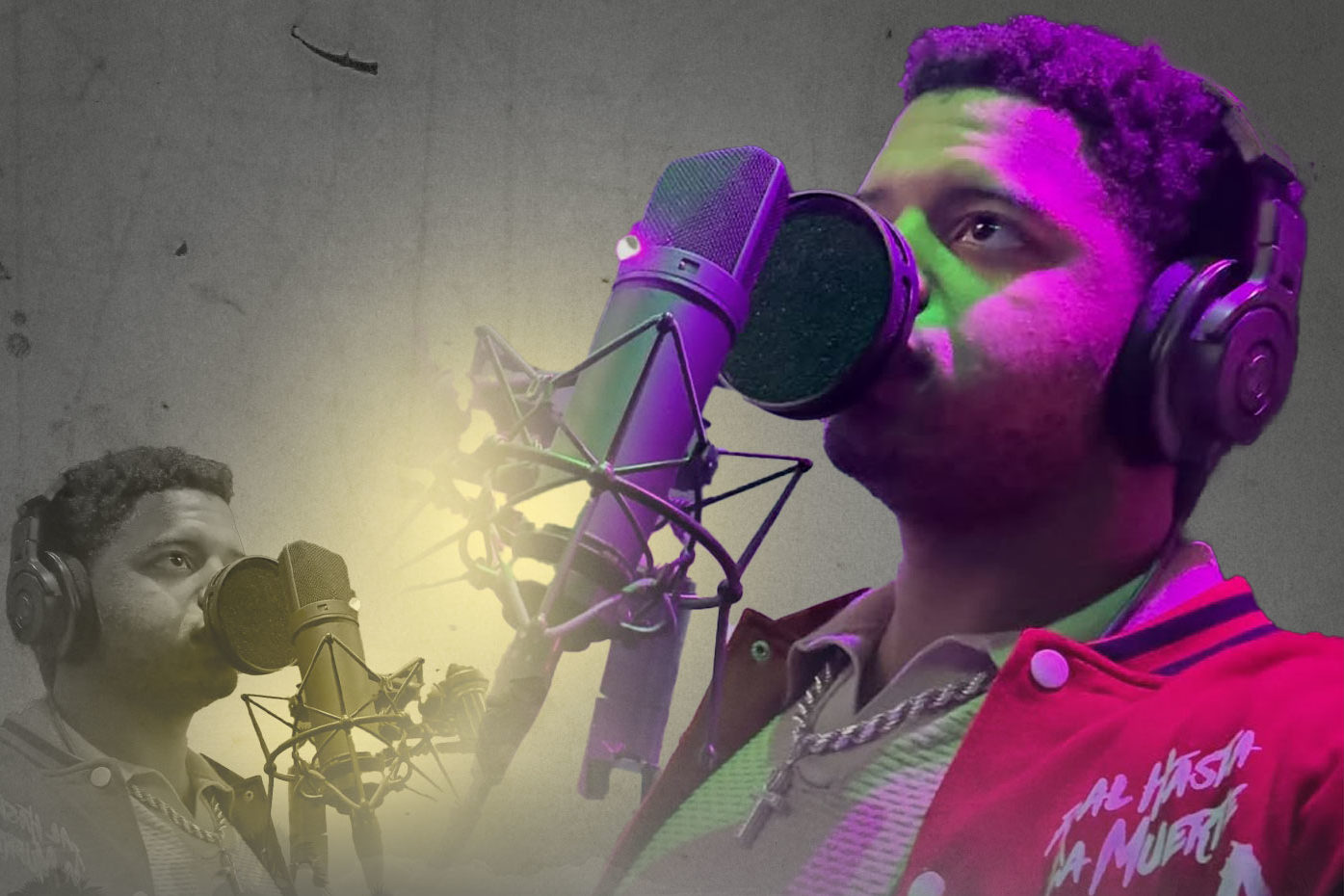
When Jackpotlott spoke about the studio, the conversation got even more personal. He said that when he goes in, he wants to be relatable, but more than anything, he has to be himself. That line told the whole story. Because at the end of the day, if the artist is not honest in the booth, the song can only travel so far. It might sound polished. It might catch a quick reaction. But it will not stay with people unless there is something real inside it.
For Jackpotlott, the studio does not sound like a place where he goes to pretend. It sounds like a place where he goes to process. A place where he can confront what he is carrying, slow it down, and turn it into language people can feel. That is why his relationship to music feels deeper than performance. It feels therapeutic. It feels reflective. It feels like he is using the song to understand his own life while also creating something somebody else might be able to hold onto.
That level of honesty is what gives an artist room to grow into something lasting. Jackpotlott is not only making records to entertain people. He is making records to examine things. To cope. To breathe. To say what might be too layered or too heavy to explain any other way. That kind of songwriting always carries a different kind of force.
One of the deepest parts of the interview was hearing Jackpotlott explain how music helps his mental health. He spoke about songwriting as a way to process life, and that idea opens everything up. Sometimes life happens too quickly for a person to fully understand what just hit them. Sometimes pressure stacks up before clarity has a chance to arrive. Sometimes pain keeps moving and the mind never really gets to pause. That is where music steps in for him.
For Jackpotlott, a song becomes a place where thoughts can slow down long enough to be examined. It becomes a place where emotion can turn into structure, where confusion can become language, and where life can be processed instead of simply endured. That is what gives his music emotional weight. He is not just writing to make noise. He is writing to understand what he feels and why he feels it.
At the same time, he also made it clear that creativity is not only about pain for him. It is also where he gets to challenge himself, entertain himself, and play with words in ways that feel freeing. That balance is important. Jackpotlott is not boxed into one emotional lane. He can create from heaviness, but he can also create from curiosity. He can reflect deeply, but he can also move with imagination. That kind of range gives the art texture.
When Jackpotlott spoke about the song “Keep My Head Up,” the emotional foundation of his artistry became even more visible. The record, written with a fellow soldier, is rooted in how they deal with life and how they keep moving forward through struggle. That context makes the song title hit harder. This is not fake motivation. This is not a slogan. This is coming from people who understand pressure as part of daily reality and resilience as something you actually have to practice.
That is why a record like that carries real weight. It is not just about sounding inspirational. It is about documenting endurance in a way people can hear. It is about making a record that comes from a lived place and not just an imagined one. Jackpotlott sounds like somebody who understands that music can become testimony when it is written from a place that honest.
There is something deeply cinematic about that kind of songwriting. Not because it is exaggerated, but because the stakes are already there in the life itself. The song becomes a scene. The emotion becomes the camera angle. The lyrics become the evidence that somebody lived through something and found a way to turn it into art instead of silence.
One of the most unforgettable moments from the podcast came when Jackpotlott opened up about a song concept built around a deeply human question: if he were to leave this earth today, what would he want to say to his girl and his family? That is not casual songwriting. That is vulnerable. That is intimate. That is the kind of concept that instantly tells you this artist is willing to write from a place most people only visit in private.
That moment mattered because it showed where Jackpotlott is willing to go as a writer. He is not afraid to sit with thoughts about mortality, love, legacy, and unfinished emotion. He is not afraid to let the song hold difficult truths. That is where artists become unforgettable. Not when they only write to sound impressive, but when they write from a place that carries consequence.
What makes that so powerful is that Jackpotlott does not seem interested in emotional performance. He seems interested in emotional honesty. He wants the music to preserve something real. He wants the record to hold what matters before life moves again. That kind of writing leaves a mark because it comes from the deepest part of the human experience.
Another powerful detail from the interview came when Jackpotlott reflected on his earliest music. He admitted that those songs did not sound the way he wanted them to sound back then, but he also said the message in them was making people cry. That says everything. Before the production got sharper, before the execution caught up to the vision, before the artist development fully tightened the presentation, there was already truth in the records strong enough to move people.
That matters because it shows where his real gift lives. It is not just in polish. It is not just in aesthetics. It is in the emotional core of what he is saying. Jackpotlott appears to have had that from the start. The ability to make people feel something was already there before everything else started catching up around it.
That is what gives an artist longevity. Trends will always change. Sounds will always evolve. But if somebody can move people honestly, there is always something real to build on. That is part of what makes Jackpotlott feel promising. The foundation is not fake. The message was there first.
The word legacy hangs over Jackpotlott in a very real way. He does not sound like somebody obsessed only with quick attention. He sounds like somebody who wants the music to last. He wants the songs to mean something after the moment passes. He wants the art to carry proof that he was here, that he felt deeply, and that he turned those feelings into something honest enough for other people to connect to.
That long-game mentality becomes even more layered when you add in the fact that Jackpotlott is also an official music curator for 99.7 The Heat Miami, which is officially part of the Apple Music radio family. That role says something important about his ear, his taste, and his place inside a larger music ecosystem. It means he is not only building as an artist, but also contributing to culture through curation. That kind of responsibility speaks to trust and perspective.
For somebody like Jackpotlott, curation is not a small detail. It adds another dimension to the story. It shows that his relationship to music goes beyond just releasing his own records. He is also sharpening how he listens, how he evaluates, and how he helps shape conversations around sound. That makes the journey feel bigger.
At a time when the game feels flooded with distraction, Jackpotlott feels like a reminder that the real artist still matters. The artist with something to say still matters. The artist who writes from reflection instead of performance still matters. The artist who understands pain, purpose, and emotional clarity still matters. The artist who wants the music to outlive the rollout still matters.
Jackpotlott is still building, still evolving, and still stepping deeper into his own voice. But the most important things are already there. The self-awareness is there. The discipline is there. The emotional intelligence is there. The honesty is there. The purpose is there. And most importantly, the message is there.
That is why this story feels cinematic. Not because anything is being exaggerated, but because the stakes are real. There is real life inside the music. There is real thought behind the words. There is a real person trying to turn pressure into purpose and purpose into legacy. In a world full of disposable noise, that kind of intention still cuts through.
Listen to the JACPOTLOTT Podcast via iHeartRadio below:


